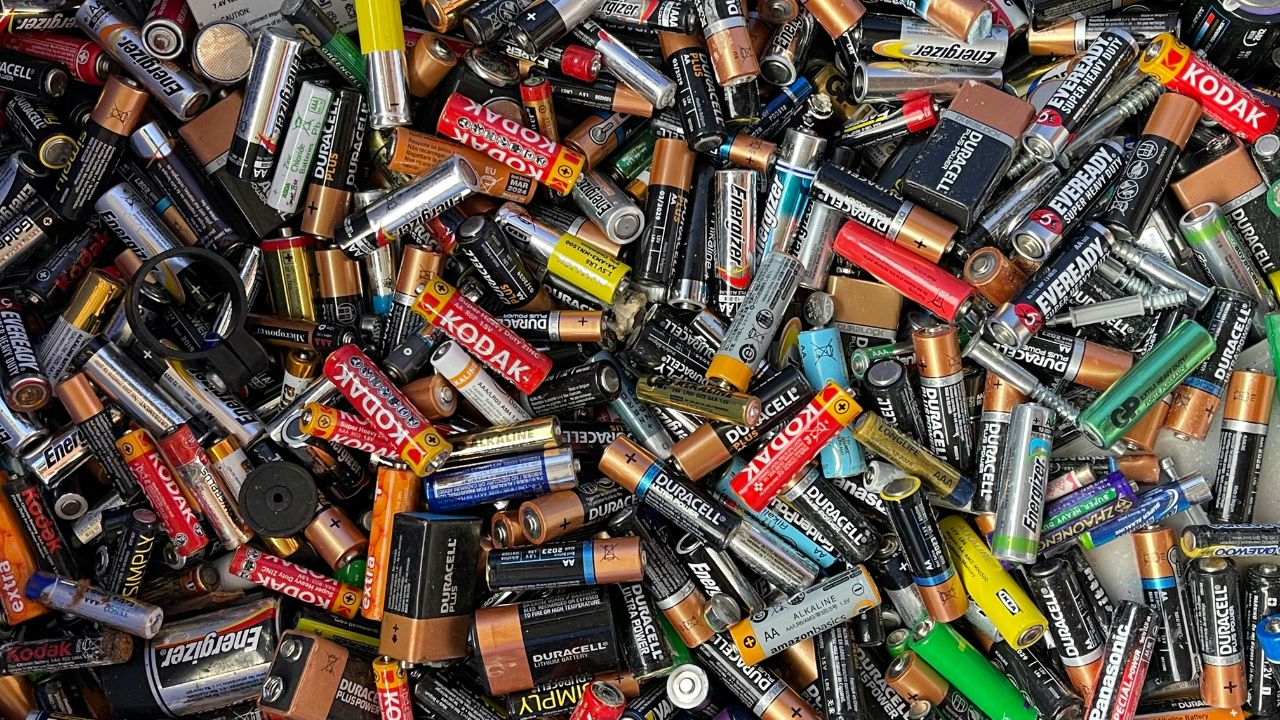
RESOURCE RECOVERY
Exploring the recovery of valuable materials from used batteries, with the potential to develop these materials as resources for future battery production.
OUR APPROACH
Batteries that have reached the end of their service life still contain various valuable materials with the potential to be recovered and reused.
RePyra approaches battery recycling as a material recovery chain, starting with used batteries and continuing through material separation, purification, quality characterization, and evaluation of their potential for reuse in battery applications.
CIRCULAR BATTERY
The real value of battery recycling lies in recovering materials, understanding their quality, and evaluating whether they can be reused in high-value applications.
01
Used batteries as a source of materials for recovery.
02
Recovering valuable components and materials from used batteries.
03
Evaluating material characteristics to understand their quality and potential.
04
Exploring opportunities to return recovered materials to the value chain.
MATERIAL RECOVERY
Following preliminary processing, active battery materials can be separated and further processed to recover their valuable components.
The recovery process is designed according to battery type, material composition, required purity levels, and the intended application of materials after recycling.
01 — INPUT
Used Battery
02 — RECOVERY
Valuable Materials
03 — PURIFICATION
Recovered Material
04 — VALIDATION
Material Characterization
MATERIAL CHARACTERIZATION
Recycled materials need to be understood not only in terms of chemical composition, but also their physical characteristics and material behavior.
Characterization helps evaluate material consistency, powder properties, mechanical characteristics, and other relevant parameters before the materials are considered for further use.
Chemical Properties
Evaluating the composition and quality of recovered materials.
Powder Properties
Understanding the characteristics and behavior of powder materials.
Mechanical Properties
Evaluating mechanical characteristics relevant to the materials.
Material Consistency
Understanding material consistency before further utilization.
RECOVERY → REUSE
The ultimate goal is not only to recover materials from used batteries, but also to determine whether their quality allows them to be developed into battery materials or other high-value applications.
01
Used Battery
02
Material Recovery
03
Purification
04
Characterization
05
Material Reuse
MATERIAL VALIDATION
Recycled materials must undergo evaluation before they can be considered for battery applications. Material characterization provides a foundation for understanding the quality of recovered materials.
At a further development stage, recovered materials may be formulated into battery materials, tested in prototypes, and evaluated for performance to understand their potential for reuse.
MATERIAL
Characterization
DEVELOPMENT
Prototype
VALIDATION
Performance
REPYRA APPROACH
Battery recycling development requires integration between material recovery technologies, purification processes, characterization, and reuse evaluation.
01
Exploring processes for recovering valuable materials from used batteries.
02
Understanding the physical, chemical, and powder properties of recovered materials.
03
Evaluating the potential of recovered materials for reuse in battery applications and other valuable uses.
BATTERY RECYCLING
RePyra welcomes project development, technology studies, and collaboration opportunities in battery material recovery, characterization, and potential reuse.