Aligned with the rapid global electrification trend, RePyra is developing an advanced battery recycling initiative focused on safe, controlled, and verifiable material recovery. Rather than treating battery recycling as a shortcut to “renewed” products, we focus on closing the battery lifecycle responsibly—by recovering critical materials at the chemical level and returning them to energy storage applications. Our approach emphasizes process integrity, material traceability, and rigorous performance testing, addressing the current gap in advanced battery recycling infrastructure in Indonesia.
Critical material recovery (Lithium, Cobalt, Nickel)
Mitigation of hazardous waste (B3) environmental risks
Supporting national energy independence
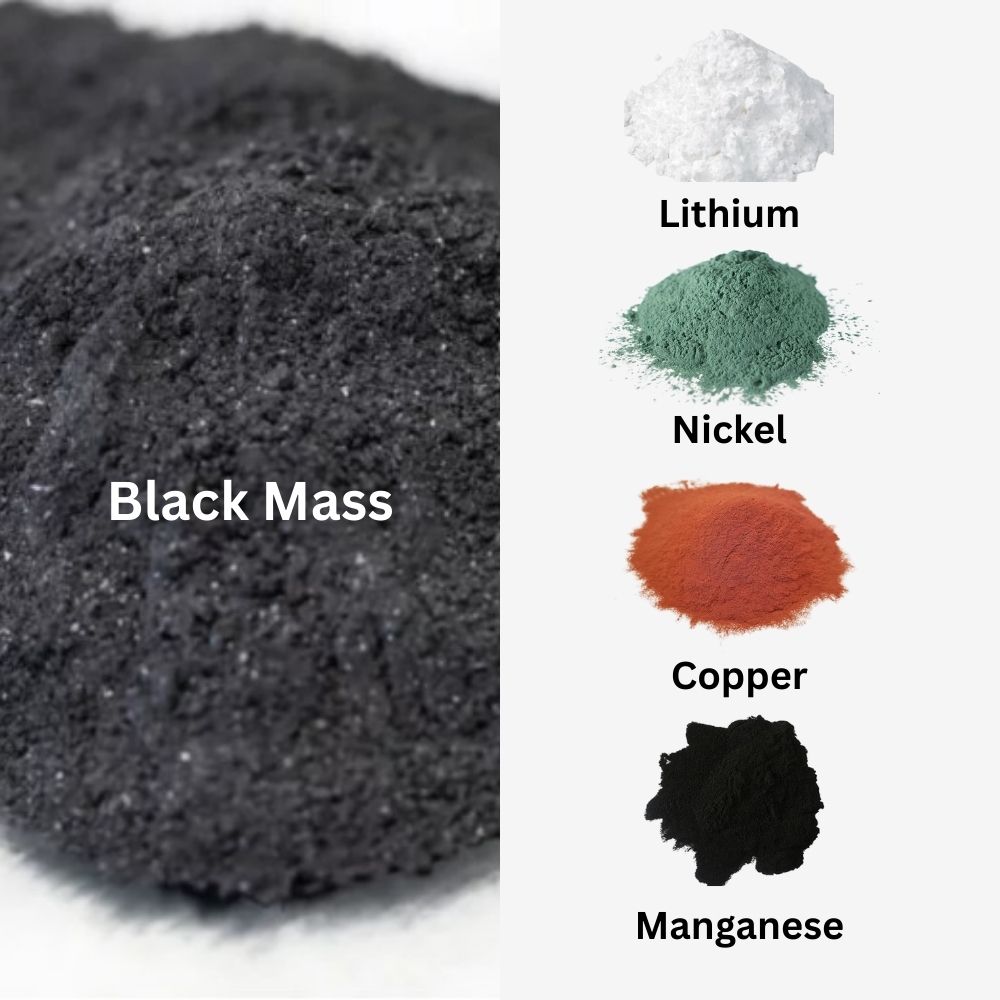
Advanced Battery Recycling is not positioned as a standalone waste project—it is a long-term commitment by RePyra to build the foundation of a genuinely circular energy transition. We believe the materials for future batteries already exist within the batteries in use today. RePyra’s strategy is built on collaboration with proven Japanese recycling and battery testing technologies, enabling the development of facilities capable of processing battery black mass (LiB, Ni-based batteries, and future chemistries) into separated, verifiable material compounds—such as lithium-based, nickel-based, or copper-based materials—without misrepresenting them as “new” battery products. The recovered materials are intended for energy storage and secondary applications, where safety, performance consistency, and material validation are critical.
Laboratory-scale development of lithium-ion battery waste handling protocols, black mass characterization, and recovery pathway mapping—supported by advanced material testing.
Integration of material recovery systems with RePyra’s broader industrial ecosystem, aligning thermal processing, furnace systems, and material validation into a controlled recycling workflow.